
Composite bats and alloy bats perform almost identically in lab exit velocity tests. Yet they feel completely different in your hands, behave differently in cold weather, fail in different ways, and cost nearly twice as much apart at retail. The material matters — just not for the reason most people think.
Here’s the honest breakdown: which construction wins, who it wins for, and the few situations where the “obvious” answer is actually wrong.
Composite bats offer a larger sweet spot, less vibration on mishits, and higher pop after break-in — making them ideal for contact hitters. Alloy bats are hot out of the wrapper, more durable in cold weather, and cost $200–$250 less. For power hitters and youth players, alloy often wins.
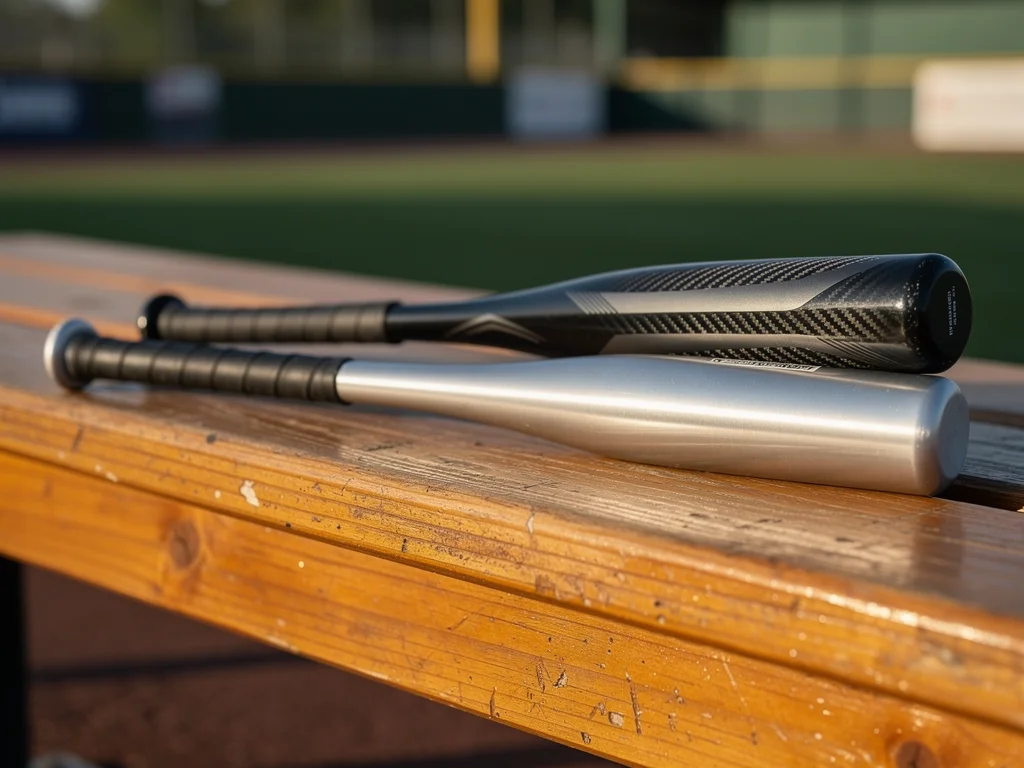
Composite vs Alloy: Head-to-Head
Composite and alloy baseball bats differ in sweet spot size, vibration, break-in, cold weather tolerance, and price. Composite suits contact hitters who need a forgiving barrel; alloy suits power hitters and cold-climate players who want durability and immediate performance. Neither is universally better — player type and climate drive the decision.
| Criteria | Composite | Alloy |
|---|---|---|
| Sweet Spot Size | Larger, more forgiving | Smaller, more precise |
| Vibration on Mishits | Low — flex dampens sting | Higher — direct feedback |
| Break-In Required | Yes — 150–200 swings | No — hot out of the wrapper |
| Cold Weather Use | Risk of cracking below 60°F | No temperature restriction |
| Failure Mode | Cracks (often unplayable) | Dents (often still playable) |
| Lifespan | 1–3 seasons | 3–5+ seasons |
| BBCOR Price Range | $380–$500 | $200–$260 |
| Best For | Contact hitters, advanced players | Power hitters, cold climates, budget buyers |
What Is a Composite Bat?
A composite bat uses layered carbon fiber materials molded under heat and pressure into a barrel. It requires 150–200 break-in swings to reach full performance, features a large sweet spot and low vibration on mishits, and is vulnerable to cracking below 60°F due to brittle resin.
A composite bat is constructed from layered carbon fiber materials — sheets of woven graphite fibers bound together with resin, then molded under heat and pressure into a barrel shape. The layered construction lets manufacturers tune stiffness and flex independently: stiffen the barrel for pop, add flex to the handle to kill vibration, or tune the trampoline effect with surgical precision.
The tradeoff is a break-in period of 150–200 swings before the fibers loosen enough for the barrel to perform at full capacity. Swing it straight out of the bag and it feels dead. Put 200 proper break-in swings on it and a different bat appears.
Composite barrels are also vulnerable to cracking below 60°F. Cold temperatures make the resin brittle, and a hard contact below that threshold can cause internal delamination — separation between the carbon fiber layers — that kills the barrel without leaving visible damage on the outside.
A composite bat is constructed from layered carbon fiber materials, featuring a larger barrel, reduced vibration on mishits, and a required break-in period of 150–200 swings. Composite barrels are vulnerable to cracking below 60°F.
What Is an Alloy Bat?
An alloy bat is made from a single-piece metal alloy (typically aluminum-scandium or aluminum-zinc-magnesium blend), drawn and heat-treated into shape. It performs immediately with no break-in, works in all temperatures, and fails by denting rather than cracking — often staying playable even after damage.
An alloy bat — also called an aluminum bat — is formed from a single piece of metal alloy: typically an aluminum-scandium or aluminum-zinc-magnesium blend. The barrel is drawn from a single tube, heat-treated, and shaped in one piece. No bonding agents, no layers, no resin.
The result is a bat that performs identically on day one as it does after a full season. No break-in. Alloy bats are hot out of the wrapper, maintain consistent performance in all temperatures, and when they fail, they usually dent — meaning you often keep swinging it even after it’s damaged.
The downside: the barrel walls can only be made so thin before they flex inward instead of outward on contact. That limits barrel size and sweet spot compared to composite. Mishits sting — the metal transmits vibration directly back through the handle into your hands.
An alloy bat (also called aluminum bat) is constructed from a single-piece metal alloy, offering immediate out-of-wrapper performance, high durability, and reliable cold-weather use — typically at a lower price than composite equivalents.
Head-to-Head: Six Criteria That Actually Matter
1. Sweet Spot Size
Composite wins here, and it’s not close. The carbon fiber layered construction lets manufacturers build barrels with a larger, more uniform trampoline surface. A mishit two inches off center still compresses and rebounds efficiently on a composite barrel. The same swing on an alloy bat results in a dead ball and a stinging grip.
For contact hitters, this is the whole game. Contact hitters make contact everywhere — not just barrel. The sweet spot size on a composite bat directly translates to more line drives and fewer ground balls on off-center contact. Power hitters care less — when you’re barreling it up 80% of the time on intent swings, sweet spot size matters less than raw energy transfer on solid contact.
2. Vibration and Feedback
Composite bats absorb vibration; alloy bats transmit it. The handle flex on a two-piece or three-piece composite bat acts like a vibration damper — the connection point between barrel and handle deflects energy away from your hands instead of into them. On a mishit, you feel almost nothing.
Alloy bats — especially one-piece designs — send every joule of that mishit energy straight into the grip. Some hitters want that feedback. Power hitters making solid contact on most swings may actually prefer the crisp, direct feel of alloy. But for contact hitters who foul off the end or barrel-in frequently? Alloy feedback becomes hand sting fast.
3. Break-In Period
Alloy wins: zero days, zero swings. Composite bats require 150–200 break-in swings before they reach full performance. The protocol matters too — rotate a quarter-turn after each swing, use a real ball (not a cage ball), and start with tee work before moving to live pitching. Skip the protocol and you risk uneven fiber loosening that permanently limits the barrel.
Players who rotate multiple bats or get a new bat mid-season need to factor this in. For youth players, the break-in protocol alone can be a dealbreaker — tournament schedules don’t always give you four free weeks on a tee.
4. Cold Weather Performance
60°F is the threshold. Below it, composite bats risk permanent damage. The resin binding the carbon fiber layers becomes brittle in cold temperatures. A hard contact — especially off the end of the barrel — below 60°F can cause internal delamination: the layers separate without any visible cracking. The bat feels dead, pops less, and in some cases fails its BBCOR certification without any external sign of damage.
Alloy doesn’t have this problem. Metal contracts slightly in cold weather but does not become brittle at playing temperatures. Spring seasons in the Northeast, Midwest, and Pacific Northwest bring plenty of sub-60°F game days. If you’re playing in those climates, alloy isn’t just cheaper — it’s the right call.
Below 60°F: always swing alloy. Composite barrels risk internal delamination on hard contact in cold temperatures — the damage is invisible but the performance and BBCOR certification are affected.
5. Durability
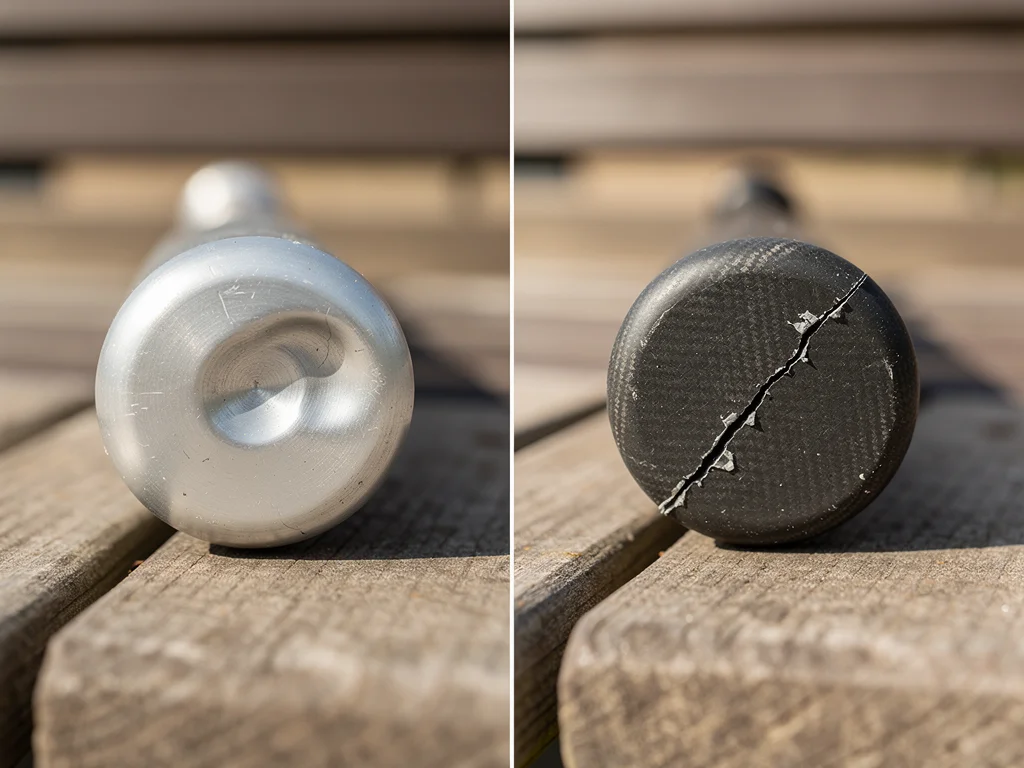
Composite bats crack. When a composite barrel fails, it typically fails completely — a crack that runs along the barrel wall, often after a hard mishit or cold-weather contact. At that point the bat is done. BBCOR certification is voided and no league will let you keep using it.
Alloy bats dent. A dented alloy bat usually still hits. The dent creates a local dead spot, but the rest of the barrel performs. Many players have run alloy bats through a full season with cosmetic dents and still gotten full performance.
From a durability standpoint: alloy bats have longer lifespans (3–5+ seasons vs 1–3 for composite) and fail more gracefully. Premium composites from Rawlings, DeMarini, and Louisville Slugger have improved dramatically in recent years, but composite as a category still has a higher failure rate than alloy — especially in the first season when break-in is incomplete.
We track durability actively on every bat we review. For current durability standings, see our best BBCOR bats for contact hitters and best BBCOR bats for power hitters roundups — every bat carries a live durability signal.
6. Price
Alloy wins by $150–$250 at BBCOR. Current market pricing runs roughly $200–$260 for premium alloy (CAT X, Voodoo One, The Goods), versus $380–$500 for premium composite (Meta, ICON, CF). The composite price is driven by manufacturing complexity — layered carbon fiber is labor and material intensive. Alloy is drawn from a single metal tube, a far simpler process.
The value question is simple: if you’re a power hitter who barrels it up consistently, a $230 alloy bat may outperform a $500 composite for your game. If you’re a contact hitter who needs that larger sweet spot and less hand sting, the composite price buys real performance — not marketing.
The Misconception Nobody Talks About
Most sites recommend alloy as the “lightweight” choice for smaller contact hitters — that’s backwards. One-piece alloy bats transmit full vibration on mishits, punishing contact hitters who don’t barrel every swing. A two-piece composite delivers both lighter swing weight AND reduced vibration, making it the correct fit for smaller contact hitters.
Most review sites recommend alloy bats as “lightweight options” for smaller contact hitters. That’s wrong — and it leads to bad bat fits.
Here’s why: one-piece alloy bats — which dominate the entry and mid-level alloy market — are actually harder to control for smaller contact hitters, not easier. One-piece construction transmits full vibration on every mishit. A smaller player who makes contact all over the barrel gets hand sting on every at-bat. The bat’s swing weight may be light, but the feel is punishing.
For smaller contact hitters, a two-piece composite is the right answer: lighter swing weight AND reduced vibration. The bat that’s lightweight and forgiving for a 5’8″, 160-pound contact hitter is almost always a two-piece composite, not a one-piece alloy.
Our bat materials and construction guide covers construction joints and their impact on feel in detail. If the vibration question matters to your game, start there.
What About Hybrid Bats?
Hybrid bats split the difference: alloy barrel, composite handle. You get the alloy barrel’s durability and no break-in requirement, combined with the composite handle’s vibration dampening. It’s a real compromise that works well for players who want some hand protection without the full composite price or the break-in overhead. Hybrid bats are worth a dedicated look — they occupy a meaningful position in both BBCOR and USSSA markets.
Final Thoughts — Which Bat Material Is Right for You?
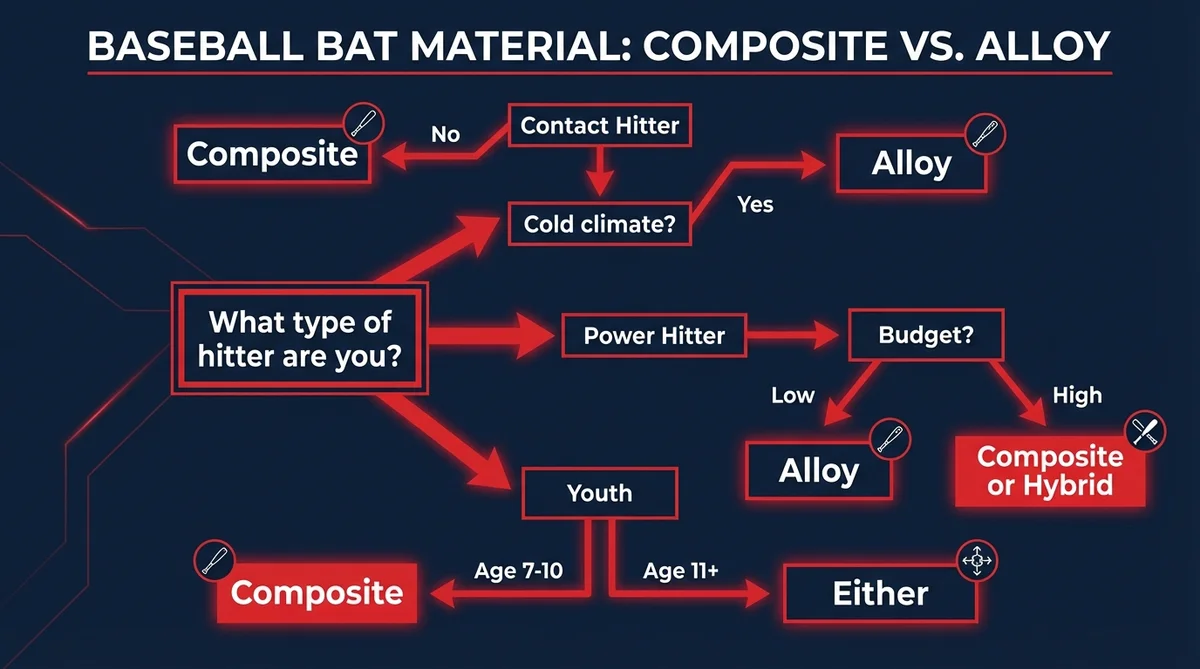
Contact hitters benefit most from composite — larger sweet spot, reduced hand sting. Power hitters can use alloy or hybrid for durability and immediate pop. Cold-climate players should default to alloy below 60°F. Budget buyers get more bat per dollar from alloy. Advanced contact hitters with an established swing are the clearest case for composite’s premium price.
Composite vs alloy isn’t a clear-cut answer — it’s a routing question. Here’s where each material wins.
Frequently Asked Questions
Is a composite bat better than an alloy bat?
Neither is universally better — composite wins for contact hitters needing a forgiving sweet spot; alloy wins for power hitters and cold-climate players who want durability and no break-in.
It depends on your hitting style. Composite bats have a larger sweet spot and less vibration — better for contact hitters. Alloy bats are more durable, perform immediately with no break-in, and handle cold weather without cracking — better for power hitters and cold-weather climates.
Do composite bats hit farther than alloy bats?
Not meaningfully — BBCOR certification caps barrel flex for both. Composite’s larger sweet spot produces more solid contacts on off-center hits, which can translate to better real-world results.
In controlled lab tests, the difference in exit velocity between composite and alloy is minimal at BBCOR. The barrel flex (trampoline effect) is capped by certification. In real gameplay, the larger sweet spot on composite means more solid contacts on off-center hits — which can translate to better results, but it’s not a raw distance advantage.
At what temperature should you stop using a composite bat?
Stop using composite below 60°F — cold temperatures make the carbon fiber resin brittle, risking internal delamination that kills barrel performance without any visible external damage.
60°F is the general threshold. Below that temperature, the carbon fiber resin becomes brittle and a hard contact can cause internal delamination — the layers separate internally without visible cracking. The bat loses pop and BBCOR certification compliance. Always use an alloy bat in temperatures below 60°F.
How many swings does it take to break in a composite bat?
150–200 swings using the quarter-turn rotation method with real baseballs, starting on a tee. Rushing or skipping the protocol causes uneven fiber break-in that permanently limits barrel performance.
150–200 swings is the standard. Rotate the bat a quarter-turn after each swing, use real baseballs (not rubber cage balls), and start on a tee before moving to batting practice. Rushing the break-in or skipping the rotation step results in uneven break-in that permanently limits the barrel’s performance.
Can you use a composite bat in cold weather?
Technically yes, but below 60°F it’s a real risk — internal delamination can occur from hard contact, voiding BBCOR certification with no visible external damage. Use alloy in cold conditions.
Technically yes — but it’s a risk. Composite bats can crack internally below 60°F on hard contact. The damage may not be visible from outside, but the barrel’s performance and BBCOR certification are affected. For cold-weather games, use an alloy bat.